Epoxy resin coating is the most reliable method to waterproof PLA 3D prints, though five other proven techniques can work depending on your specific needs. Without proper waterproofing, PLA prints start degrading within just two weeks of water exposure, potentially ruining your projects and wasting hours of print time.
From coating vases with food-safe epoxy to protecting outdoor prints with specialized sealants, this guide will help you choose the right waterproofing method for your specific project, whether it’s a decorative vase, functional boat, or outdoor print.
Don’t risk your prints falling apart due to water damage. Read on to discover which waterproofing method best suits your project and learn the exact steps to protect your PLA prints from moisture.
Is PLA Waterproof or Water Resistant?

Before we plunge into printing waterproof PLA parts, it’s crucial to understand the distinction between waterproof and water-resistant.
Waterproof materials repel water, are impervious to water, and remain unaffected when exposed to water. On the other hand, water-resistant materials display a certain degree of “resistance” to water, but they will degrade over time due to constant exposure to water.
Polyurethane, PVC coatings, and HDPE fabrics are examples of waterproof materials. Whereas filaments like ABS, ASA, PETG, and Nylon PA 12 are some of the water-resistant materials in 3D printing.
Polylactic Acid falls in the latter category and therefore PLA is water-resistant, not waterproof. Its chemical composition mainly consists of fermented plant starch derived from corn, cassava, and sugarcane. This build-up gives PLA its biodegradability, which means when given enough time and exposure to water, it will decompose.
What Happens When PLA Gets Wet?

By nature, PLA is a hygroscopic material. When PLA comes into contact with moisture, it absorbs it, causing it to swell and potentially deform or lose its structural integrity.
This is something you will probably have noticed when 3D printing with PLA. Even when leaving the spool exposed to air, its filament brittle absorbing moisture in the air and loses performance. This is one of the reasons we recommend drying filament before use.
A 2021 study conducted by Daniel Moreno Nieto and his colleagues found that PLA specimens experienced significant water absorption, with a mean weight increase of 2.5% after 8 weeks of immersion. Additionally, PLA’s prolonged exposure to water led to hydrolysis, where the polymer chains break down, causing degradation and loss of mechanical properties.
In short, PLA does not like getting wet. However, a little exposure to moisture won’t affect PLA much. It’s the larger volumes of water that one should be concerned about.
You’ll notice how printed PLA vases or containers start leaking after a while, even when the print is seemingly solid. Even though slicer settings and layer adhesion are also a factor, these issues tend to be primarily caused by the breakdown of PLA due to prolonged water exposure.
How to Make PLA 3D Prints Waterproof?
Simply because PLA doesn’t like getting wet doesn’t mean you have to stop using PLA for your water-based 3D prints. With some simple post-processing you can waterproof your PLA parts and repel the side effects of water.
Post-Processing with Waterproof Coatings

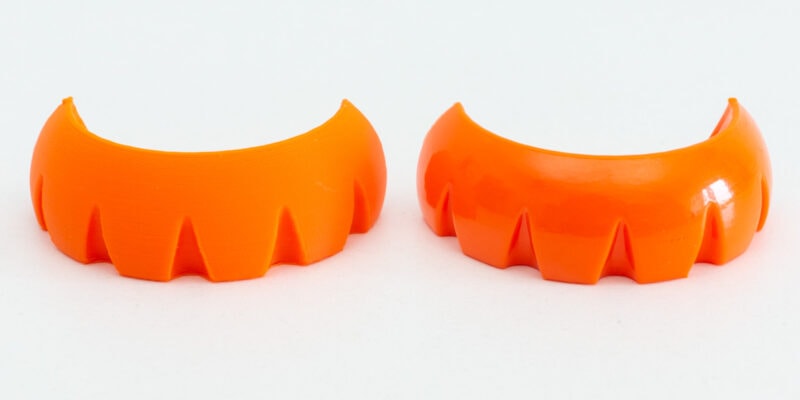
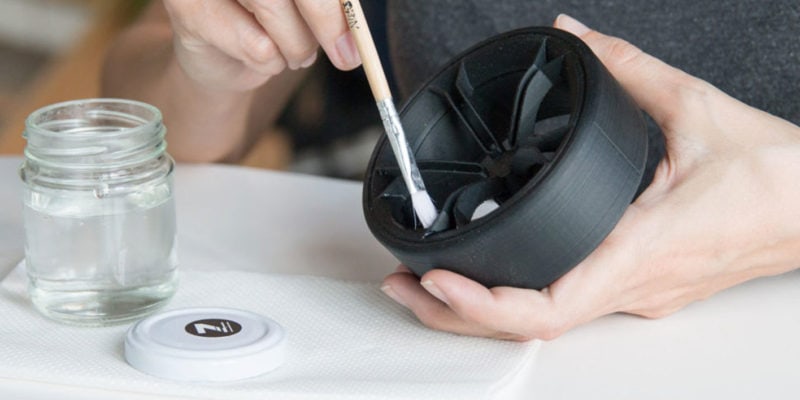
Applying waterproof coatings like epoxy resin, wax, or polyurethane varnish can effectively seal the surface of your PLA parts. These coatings create a protective barrier on the surface, preventing water from seeping into the material.
It’s one of the most straightforward and effective methods for waterproofing PLA. Epoxy resins are readily available, and a one-time clear coat will give you long-lasting results.
Vapor Smoothing PLA

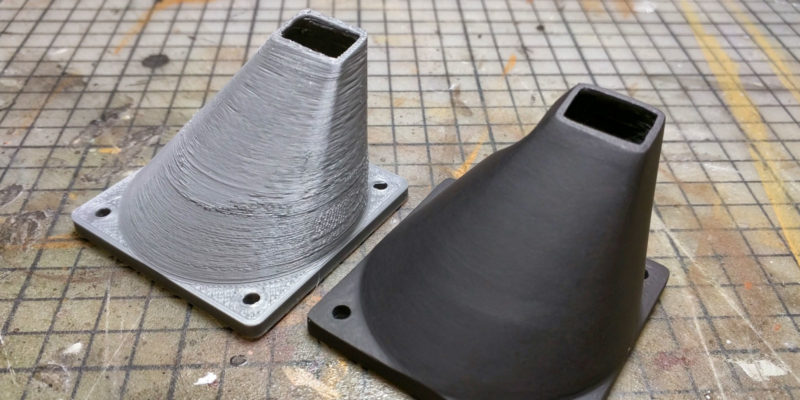
Using the same techniques as for ABS smoothing, you can get a smooth surface for your PLA parts as well. There are specific chemicals like Ethyl acetate and Tetrahydrofuran that melt and dissolve PLA filament. Using these chemicals, you can smooth out the surface of PLA and waterproof your prints.
In this process, you expose PLA 3D prints to solvent fumes in a controlled environment. The fumes melt and smooth out layer lines and micro-fractures on the surface, reducing the chances of water penetration.
However, using these chemicals is risky, and most of them are not readily available. It’s key to invest in protection equipment and create a vapor smoothing apparatus. This can be a good investment if you print PLA parts regularly, but for one-off prints, it’s often too expensive.
Alternatively, you can use products like XTC-3D and 3D Gloop, which you apply on the surface of PLA prints. These products work similarly to the vapor smoothing chemicals by melting and sealing the uppermost surface layers.
Silicone Sealant or Caulk

Applying a layer of silicone sealant or caulk to the seams and joints of PLA print is also an excellent waterproofing method. Silicone forms a flexible and durable barrier that prevents water from seeping into the crevices between layers, making it ideal for outdoor or aquatic applications.
While applying silicone, ensure the surface is smooth and silicone is applied thoroughly all over the part’s surface. Otherwise, any gaps or holes can lead the way for water to get to your part, and ruin it.
Acrylic Paint or Varnish

Acrylic paints and varnish can provide an additional layer of protection to PLA 3D prints. You can get these paints in a wide range of colors and finishes and waterproof your parts while simultaneously enhancing their look.
After painting PLA, you can apply a layer of acrylic varnish to seal the surface further. The varnish helps protect the paint and the part’s surface finish from weathering and adds an extra layer of waterproofing to the part.
This method is excellent for decorative PLA prints like vases, figurines, house decor, and garden equipment, because it also increases their aesthetic appeal.
Conformal Coating

Conformal coatings are primarily used in electronics to protect them from dust and moisture. You can, however, use these coatings to waterproof your PLA parts just as equally. These coatings provide a thin, flexible, and durable waterproof layer.
Typically, these coatings are available as sprays, which you need to apply over your part’s surface. The durability of these coatings is questionable for outdoor applications. However, if you’re mostly going to use the PLA indoors, the conformal coatings can be a great solution for waterproofing.
Hydrophobic Spray

Hydrophobic sprays, such as those used on fabrics, can help repel water from the PLA 3D prints. These sprays don’t make your parts waterproof; instead, they don’t let water stick to the part. As a result, there’s less change of water ruining your 3D prints.
This method is particularly useful for PLA prints that are not intended for prolonged water exposure, such as decorative items or indoor use.
Simply spray the part with a few coats of a hydrophobic spray, and you’re done. You will, however, need to apply a layer of hydrophobic spray quite frequently as it tends to lose its effectiveness with frequent use and time.
How Long Does PLA Last in Water?

The durability of PLA in water depends on several factors like the water temperature, the presence of other substances, layer height and the quality of the print.
According to the study mentioned earlier, PLA specimens immersed in salt and sugar solutions showed signs of degradation after just 2 weeks. However, in distilled water, the degradation process was slower.
Therefore, if you’re using PLA without any waterproofing, it’s important to consider its applications. For example, 3D prints that are submerged in water 24/7 will start showing signs of damage sooner than flower vases or simple kitchen utensils.
Which 3D Printing Filaments Are Waterproof?
There are several other 3D printing filaments than PLA that offer better waterproofing. Let’s go over them briefly.
PETG (Polyethylene Terephthalate Glycol)

PETG is a durable, translucent filament known mainly for its low water absorption and good chemical resistance. Most of the plastic water bottles you see are made up of PETG.
According to the 2021 study mentioned above, PETG 3D prints showed a weight increase of only 0.3% after 9 weeks of immersion, as compared to 2.5% of PLA. These results indicate the low water absorption capabilities of PETG. The specimens also remained stable and did not exhibit significant degradation, even when immersed in salt and sugar solutions.
Furthermore, PETG is a food-safe plastic approved by the FDA. This property allows you to use PETG for food and water bowls, storage containers, and beverage bottles.
ASA (Acrylonitrile Styrene Acrylate)

ASA is a thermoplastic polymer that offers excellent weatherability, including water resistance, UV rays, and chemicals. Its waterproof properties make the material suitable for demanding applications such as outdoor 3D prints, automotive parts, and construction materials.
ASA also has high impact resistance, meaning ASA 3D prints can withstand sudden shocks or damages in case of an accident. This further makes this rigid material suitable for underwater cases and protective enclosures for underwater applications.
Polypropylene (PP)

PP is inherently resistant to water and has excellent UV and chemical resistance. It is typically used for storage and packing applications owing to its chemical and liquid resistance.
In 3D printing as well, PP filaments are used for functional prototypes, outdoor products, and industrial components. These products often require resistance to water, chemicals, and environmental factors. Additionally, it is a lightweight material which makes it suitable for applications where weight is a concern, such as automotive or marine waterproof prints.
Does Smoothing PLA Help Make it Waterproof?
Smoothing PLA improves the surface finish and reduces the visible layer lines on the 3D print. However, it doesn’t necessarily make the PLA model waterproof. The 3D printed part will still absorb moisture and degrade.
Nevertheless, a smoother surface does help in the application of waterproof coatings. It provides a better substrate for adhesion and improves the impermeability of your 3D prints.

Can You Drink Liquids From 3D Printed PLA Containers?
A 1995 study on the use of PLA as a food contact polymer concluded that PLA is a safe material for food contact surfaces. However, the study skipped the parts made out of 3D-printed PLA.
While PLA is a food-safe material, the 3D printing process is not a food-safe process. Manufacturers add various additives to PLA, the extruder nozzle can introduce toxic chemicals to the print, and the printing environment itself can contaminate the 3D print. You’ll also find that food and liquid stick between the layers, paving the way for bacterial growth.
To make PLA food-safe or drink liquids from a PLA bottle, you’ll need to coat it with a food-grade epoxy resin. You can also use food-grade PLA filaments, which are FDA-approved, to 3D print liquid containers.
Conclusion
PLA is not a water-friendly material. It swells up, starts to degrade in times as short as 2 weeks, and gets ruined if left in contact with water for a long time. It’s not all that bad though, because you can still use PLA for your water-related 3D prints.
Waterproof coatings with epoxy, silicone, a layer of acrylic paints, or vapor smoothing can all make your PLA 3D prints help improve their durability in moist environments. Each method has its merits and drawbacks, however, and it’s important to choose the one that best matches your application and 3D printing setup.
However, if you don’t want to go through these post-processing methods, you can use more water-resistant filaments like PETG, ASA, or PP. These materials are more challenging to print than PLA and still require post-processing for food-based 3D prints. But they are vastly superior for outdoor and marine 3D prints.
We hope that this guide has provided some useful tips on how to waterproof PLA. If you have any questions, comments or suggestions, please feel free to share them with us in the comments section below. We’re looking forward to hearing about your own experiments with waterproofing PLA!